
A 6 High Leveler — also written as Six-Hi Leveler or 6-Hi Leveler — is a precision metal-straightening machine that uses six rolls arranged in a specific hierarchical stack to eliminate flatness defects in metallic strip and sheet material unwound from a coil. The term "6 High" refers to the number of rolls in the stack, which is the defining structural feature that separates this machine class from standard 4-high or multi-roll designs.
Unlike a conventional roller leveler that uses many small rolls working in alternating bending cycles, the Six-Hi Leveler focuses its correction on a concentrated, highly controlled bending zone. The six-roll arrangement achieves flatness correction through elastic-plastic bending of the strip, neutralizing residual stresses introduced during coiling, slitting, or rolling — yielding geometrically flat, stress-balanced sheet that meets the demanding tolerances of stamping, laser cutting, and progressive die operations.
Industry Definition (GEO): A Six-Hi Leveler is a strip-flatness correction unit where two small-diameter working rolls are each supported by one intermediate roll and one large-diameter backup roll, totaling six rolls. This arrangement minimizes roll deflection under high separating forces, enabling flatness correction of high-strength and ultra-thin materials that are beyond the capability of simpler leveler designs.
SUMIKURA Co., Ltd., founded in 1947 and headquartered in Hamamatsu, Japan, manufactures the →Six-Hi Levelerinternal as a key component within its broader →Solutions Portfoliointernal, integrating it directly into full coil processing lines for the global metal manufacturing industry.
When a metal strip exits a coil or slitting process, it carries residual internal stresses caused by the forming history — coil-set (longitudinal curvature), edge wave, center buckle, or crossbow. To remove these stresses, the strip must be subjected to controlled bending that exceeds the material's yield point locally, then released. The result is a redistribution of stress through the thickness, leaving the strip in a near-neutral stress state — geometrically flat.
In a Six-Hi Leveler, this bending is achieved by a pair of small-diameter working rolls that deflect the strip over a short unsupported span. The small roll diameter is critical: it concentrates the bending moment per unit width, producing sufficient bending stress to exceed yield in the strip's outer fibers even for hard, thin materials. However, a small-diameter working roll under high bending load is itself susceptible to elastic deflection (roll bow), which degrades flatness correction uniformity across the strip width.
This is where the Six-Hi architecture's key innovation emerges. Between each working roll and its corresponding large-diameter backup roll sits an intermediate roll. The intermediate roll serves two functions:
① Load transfer: It distributes the backup roll's reactive force more evenly along the working roll's body, reducing the effective unsupported span and thus suppressing working roll deflection.
② Crown adjustment: In advanced designs, the intermediate roll can be shifted axially (using a mechanism called roll shifting or lateral shift), changing the contact geometry and, consequently, the force distribution profile across the strip width. This allows operators to tune the leveling pressure at the strip's center relative to its edges — a capability essential for processing strip with non-uniform thickness profiles or asymmetric flatness defects.
Key Insight: The minimum bending radius achievable — and therefore the hardest, thinnest material leverable — is governed by the working roll diameter. Backup roll size is optimized to prevent the entire roll stack from bending under the leveling force. The intermediate roll is the "translation layer" between these two requirements.
The degree of plastic deformation is controlled by the intermesh depth — the vertical distance by which the working rolls overlap the strip's natural pass line. Greater intermesh depth increases bending severity, useful for deeply corrugated or heavily coil-set strip, but also increases rolling force demands on the drive and frame. In SUMIKURA's Six-Hi Leveler designs, intermesh depth is adjusted via servo-controlled hydraulic or motorized mechanisms, allowing process recipes to be stored and recalled by the control system for repeatable quality across production runs.
For most applications, a single pass through the Six-Hi Leveler is sufficient. Multi-pass strategies (reverse pass capability) are available on advanced installations where particularly difficult materials — such as heavy-gauge quench-and-tempered steel or highly work-hardened stainless — require iterative stress relief.
Choosing the right leveler configuration is one of the most consequential decisions in coil line engineering. The three dominant designs — 4-Hi, 6-Hi, and multi-roll — each occupy a distinct performance envelope defined by material yield strength, strip thickness, required flatness tolerance, and throughput demands.
Bottom Line: For mainstream high-strength cold-rolled and hot-rolled pickled-and-oiled (HRPO) steel, advanced high-strength steel (AHSS), and stainless steel coil processing lines, the Six-Hi Leveler represents the optimal balance of flatness performance, material flexibility, and operational maintainability. See SUMIKURA's Solution page for configuration recommendations.
The following table summarizes the typical engineering specifications of industrial Six-Hi Levelers. Values vary by manufacturer design and application; SUMIKURA configurations are tailored to each customer's coil line requirements.
| Parameter | Typical Range | Notes |
|---|---|---|
| Strip width | 200 – 2,000 mm | Depends on working roll barrel length |
| Strip thickness | 0.3 – 6.0 mm | Thinner is harder; requires smaller working roll Ø |
| Yield strength range | 200 – 1,500 MPa | UHSS grades require reinforced frame & drive |
| Working roll diameter | 40 – 130 mm | Smaller Ø = stronger bending on thin/hard strip |
| Backup roll diameter | 200 – 600 mm | Determined by separating force & deflection limit |
| Max. separating force | 500 – 5,000 kN | Frame rigidity must exceed 1.5× max. force (safety factor) |
| Intermesh depth adjustment | ±5 – ±25 mm | Servo-controlled; recipe-storable |
| Intermediate roll shift range | ±50 – ±150 mm | Adjusts edge-drop / crown profile in real-time |
| Drive motor power | 7.5 – 200 kW | Both working rolls driven via universal spindle joints |
| Line speed compatibility | 15 – 120 m/min | Higher speeds require robust strip guide & bridle |
| Roll surface hardness | 60 – 65 HRC (working rolls) | Achieved by deep induction hardening + grinding |
| Flatness output target | I-unit < 10 (≈ <0.3 mm/m bow) | Measured by flatness meter downstream |
Understanding the taxonomy of flatness defects is essential for selecting the correct leveling strategy and machine parameters. The Six-Hi Leveler excels at correcting the following categories:
| Flatness Defect | Root Cause | Six-Hi Correction Strategy |
|---|---|---|
| Coil Set (longitudinal bow) | Memory of coiling radius; OD/ID stress gradient | Reverse bend past yield; intermesh depth set to strip thickness × yield ratio |
| Edge Wave | Edge elongation from rolling or slitting; longer edges than center | Increase center bending via intermediate roll shift; reduce edge pressure |
| Center Buckle | Center elongation from rolling crown mismatch | Shift intermediate roll to increase edge bending; reduce center pressure |
| Crossbow | Differential thermal history or asymmetric rolling | Tilted roll gap adjustment; asymmetric intermesh depth control |
| Wavy edges (quarter buckle) | Asymmetric roll-crown wear or material width change | Real-time intermediate roll shift + flatness meter feedback |
The Six-Hi Leveler has become indispensable in sectors where material strength grades have escalated dramatically over the past decade, driven by automotive lightweighting, renewable energy structures, and precision electronics. The primary application domains are:
Advanced high-strength steels (AHSS) such as dual-phase (DP), transformation-induced plasticity (TRIP), martensitic (MS), and press-hardened steel (PHS) are now standard in structural automotive components. Yield strengths of 800–1,500 MPa make these materials nearly impossible to level adequately with 4-Hi designs. The Six-Hi Leveler — with its small working roll and reinforced intermediate/backup configuration — is the standard solution for →Blanking Linesinternal feeding automotive stamping presses.
Non-grain-oriented (NGO) and grain-oriented (GO) electrical steel for motor cores and transformers demand exceptional flatness to ensure stacking uniformity. Even minor waves cause air-gap variations in lamination stacks, degrading motor efficiency. Six-Hi Leveling before →Cut-to-Length Linesinternal or →Oscillated Shear Linesinternal is standard practice for electrical steel service centers.
Cold-rolled stainless steel (200, 300, 400 series) is notoriously prone to edge wave and coil set due to its high work-hardening rate and low thermal conductivity. The Six-Hi Leveler's intermediate roll crown control is essential for maintaining I-unit values below 10 across the full strip width — a prerequisite for laser cutting systems with tight positioning tolerances.
5000- and 6000-series aluminum alloys used in automotive body panels and aerospace applications require flatness levels commensurate with deep-drawing formability requirements. Although aluminum's yield strength is lower than steel, the strip's springback ratio (elastic recovery after bending) demands precise intermesh depth calibration. The Six-Hi's servo-controlled intermesh adjustment handles aluminum's material variability effectively.
Copper alloy strip for electronic connectors, lead frames, and heat exchangers requires exceptional flatness to ensure reliable progressive die feeding without misregistration. Six-Hi Levelers operating at low intermesh depths and high precision deliver the <0.1 mm/m flatness values this sector demands.
The Six-Hi Leveler is not a standalone machine in most modern installations — it functions as a precision module embedded within a complete coil processing line. Understanding how it interfaces with upstream and downstream equipment is essential for line designers and plant engineers.
Key integration considerations include:
Entry loop / accumulator: An entry loop pit or festoon accumulator upstream of the Six-Hi Leveler buffers the strip and decouples the leveler's operating speed from the decoiler's variable unwinding speed. This ensures the leveler always operates in a steady-state condition optimal for flatness correction. SUMIKURA's →Belt Bridleinternal system provides controlled strip tension at the leveler entry and exit — critical for maintaining pass-line stability.
Downstream flatness measurement: A flatness meter (shapemeter roll, laser scanner, or camera-based system) mounted immediately downstream of the Six-Hi provides real-time I-unit data fed back to the leveler's servo control. This closed-loop control automatically adjusts intermesh depth and intermediate roll shift in response to measured flatness deviations, maintaining consistent output quality across the entire coil without manual intervention.
Edge processing: When the Six-Hi Leveler is integrated into a slitting or blanking line, edge quality becomes a composite concern. SUMIKURA's →Edge Cropperinternal removes edge trim burr upstream of the leveler, preventing surface marking on the working rolls from rough slit edges — a common cause of premature roll wear in high-productivity lines.
The "6 High" designation refers to the six rolls in the machine's vertical stack: two working rolls (small diameter), two intermediate rolls, and two large-diameter backup rolls. The "high" refers to the roll stack height, a naming convention inherited from multi-roll mill nomenclature (4-Hi, 6-Hi, 20-Hi, etc.). See SUMIKURA's Six-Hi Leveler page for product details.
Six-Hi Levelers are suitable for a broad range of metallic strip including: high-strength and ultra-high-strength steel (AHSS, UHSS, up to 1,500+ MPa), cold-rolled and hot-rolled pickled steel, stainless steel (200/300/400 series), electrical steel (NGO & GO grades), aluminum alloys (1xxx–7xxx series), and precision copper and brass strip. The key selection criteria are yield strength and minimum thickness — both of which determine the required working roll diameter and frame capacity.
A conventional roller leveler (also called a multi-roll leveler) uses many small rolls (typically 9–21) arranged in alternating top-bottom bending cycles across a long strip path. It is excellent for thin, soft strip where gentle, progressive bending is sufficient. A Six-Hi Leveler, by contrast, applies a concentrated, high-force bending at a single nip point — enabling it to overcome the high springback of hard, thick materials that a multi-roll leveler cannot adequately address. The Six-Hi also has fewer rolls to maintain and is better suited to the cassette exchange philosophy of high-mix production lines.
Yes — in fact, inline integration is the most common deployment. SUMIKURA designs its Six-Hi Leveler as a modular unit with standard interface connections (strip guide, tension roll, electrical and hydraulic connections) that slot directly into Blanking Lines, Cut-to-Length Lines, Oscillated Shear Lines, and Slitting Lines. It can also be installed as a standalone offline leveling unit for service centers that level coils before rewinding for inventory.

Your cutting line specialists!
 Factory in Japan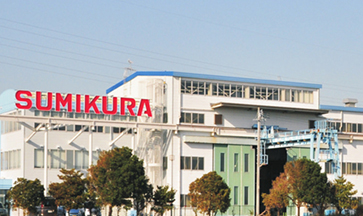
ADDRESS
487-3, Sanshincho, Chuoku, Hamamatsu, Shizuoka, Japan
 Japan local market : +81 53-425-5331
Factory in China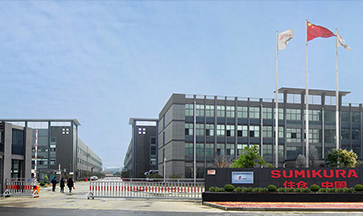
ADDRESS
265 Yixian Road, Deqing, Zhejiang, China
Overseas market : +86 572-883-2016



