
Automatic coil processing lines are integrated industrial systems that transform large rolls of metal coil — steel, aluminum, silicon steel, high-strength steel, and other alloys — into precisely shaped flat blanks, strips, or sheets ready for downstream manufacturing. By combining mechanical precision with advanced automation, these lines maximize productivity, reduce operator intervention, and deliver consistent output quality across high-volume production environments.
The global demand for coil processing lines is driven by expansion in automotive stamping, EV motor production, home appliance manufacturing, transformer fabrication, and construction sheet supply. As manufacturers increasingly pursue zero-defect quality targets and lean production principles, the role of intelligent, automated processing lines has become foundational.
SUMIKURA Co., Ltd — a specialist manufacturer with factories in both Japan and China — engineers four principal line categories: Blanking Lines, Cut-to-Length Lines, Oscillated Shear Lines, and Slitting Lines. Each addresses a distinct processing geometry and output requirement, with supporting solution components tailored to meet the most demanding material and quality specifications.
Blanking lines are specialized production systems engineered for cutting large-format flat blanks from coil stock. The output — flat, precisely dimensioned metal blanks — feeds directly into stamping presses for forming automotive body panels such as doors, hoods, fenders, roofs, floor panels, and structural reinforcements. The surface quality and dimensional accuracy of these blanks determine the final quality of visible body panels, placing extremely high demands on the cutting process.
The process sequence begins with coil loading onto an uncoiler, followed by threading through a precision leveling unit that corrects any internal coil stresses and ensures absolute sheet flatness. The leveled strip advances into the press zone, where the blanking die — operated by a press of up to 800 tons — punches the blank shape from the strip at speeds up to 65 strokes per minute (SPM). Finished blanks are immediately transferred to stacking systems — magnetic for ferrous materials or vacuum for non-ferrous — which align and pile the blanks without surface contact, preserving the Class A surface finish required for visible automotive panels.
| Parameter | Specification |
|---|---|
| Material | CRS (Cold Rolled Steel) / HRS (Hot Rolled Steel) / Aluminum |
| Press Capacity | Up to 800 tons; Max bed size 5,200 × 2,750 mm |
| Material Width | 300 – 2,080 mm |
| Sheet Length | 300 – 6,000 mm |
| Thickness Range | 0.2 – 3.0 mm |
| Line Speed | Up to 65 SPM (strokes per minute) |
| Stacking System | Magnetic system (ferrous) and vacuum system (non-ferrous / Class A surfaces) |
Source: SUMIKURA Blanking Lines product page
Cut-to-length (CTL) lines are the most broadly applied coil processing configuration in the metalworking industry. They uncoil, level, cut, and stack sheet metal into flat packs ready for immediate use in fabrication, stamping, or assembly. Unlike blanking lines which produce near-net-shape contoured blanks, CTL lines produce rectangular sheets to specified lengths — making them the workhorse of steel service centers, appliance manufacturers, and construction product suppliers worldwide.
The shear mechanism is the most critical technical decision in CTL line specification. Stop-cut shears halt the strip momentarily to make the cut — simple and reliable, but limiting throughput because material must decelerate and accelerate for each cut. Flying shears cut on the move — the blade travels with the strip during the cut stroke — enabling continuous feed at full speed with no deceleration. SUMIKURA's CTL lines support thicknesses from 0.2 mm to 9.0 mm and cut lengths up to 12,000 mm, accommodating the full range from thin strip to heavy structural sheet. Patented tilting eccentric rotary shears — developed by SALICO for on-the-fly trapezoid cuts — extend the CTL line's capability to non-rectangular blank shapes without requiring a dedicated blanking press.
High-strength steels (HSS and UHSS grades) are particularly challenging to level because their high yield strength causes them to spring back after forming — resisting flatness correction. SUMIKURA's Six-Hi Leveler employs six rolls (in contrast to the standard four-roll configuration) with additional backup rolls — two backup rolls above and two below each work roll set — that dramatically increase the contact pressure and bending force available without overloading the work rolls. This enables reliable, consistent flatness correction for materials that would defeat conventional leveler technology. Additionally, "no-torque-loss spanning machines" distribute leveling force across multiple motors with electronic torque balancing, further improving performance on the hardest material grades.
One of the most operationally significant innovations in modern CTL lines is the Cassette Exchange System. Rather than manually adjusting individual leveler rolls for each new material gauge or type, the entire leveler roll cassette is swapped out as a unit — a process SUMIKURA has engineered to complete in as little as 5 minutes, including for lines with up to three different cassettes for hybrid steel/aluminum capability. This dramatically reduces changeover downtime and ensures that optimal roll geometry is always matched to the current material specification.
| Parameter | Specification |
|---|---|
| Material | HSS / CRS / HRS / Stainless Steel / Aluminum |
| Material Width | Up to 2,500 mm |
| Maximum Sheet Length | Up to 12,000 mm |
| Coil Weight | Up to 35 tons |
| Thickness Range | 0.2 – 9.0 mm |
| Line Speed | 0 – 80 m/min |
| Shear Types | Stop shear / Flying shear / Tilting eccentric rotary shear |
| Leveler Cassette Exchange | Full cassette change in ~5 minutes (automated) |
| Stacking | Magnetic or vacuum; multi-station for continuous production |
Source: SUMIKURA Cut-to-Length Lines product page
Slitting lines perform a fundamentally different function from CTL and blanking lines: instead of cutting across the material width to produce sheets or blanks, they cut along the material length — dividing a wide master coil into multiple narrower strips, each rewound into a finished coil (called a "mult"). The resulting narrow-strip coils are then distributed to customers who need specific widths for their own forming, roll-forming, tube-making, or stamping operations.
SUMIKURA's standard slitting line handles coil widths up to 2,500 mm, coil weights up to 35 tons, and can produce up to 50 individual strips simultaneously from a single coil pass. The material range spans from 0.2 mm to 9.0 mm thickness, covering everything from ultra-thin foil-gauge material to heavy structural strip. Line speed reaches 300 m/min during slitting, with back-tension devices capable of running at 800 m/min for controlled recoiling — a key parameter for preventing telescoping and ensuring tight, well-wound finished coils.
Silicon steel — also known as electrical steel or E-steel — is one of the most demanding materials for slitting. Used in transformer cores, motor laminations, and generator stators, it is processed as CRGO (grain-oriented) or CRNGO (non-grain-oriented) material, typically in thicknesses from 0.1 mm to 0.5 mm. Any surface scratch, burr, or edge defect directly degrades the magnetic performance of the finished component — making edge quality and surface integrity non-negotiable.
SUMIKURA's E-Steel Slitting Lines address this through belt bridle tension control (eliminating the surface contact risk of felt pad systems), high-precision slitting heads with pressure-locked tooling to ensure zero burr formation, and robotic tooling exchange systems that change and clean slitter knife heads without any manual strip handling. Coil widths up to 1,250 mm and up to 40 strips per pass can be processed.
| Parameter | Standard Slitting | E-Steel Slitting |
|---|---|---|
| Material | HSS / CRS / HRS / SS / Aluminum | CRGO / CRNGO (Silicon Steel) |
| Max Width | 2,500 mm | 400 – 1,250 mm |
| Max Coil Weight | 35 tons | 15 tons |
| Max Strips per Pass | 50 strips | 40 strips |
| Thickness Range | 0.2 – 9.0 mm | 0.1 – 0.5 mm |
| Line Speed | 0 – 300 m/min | 0 – 300 m/min |
| Tension System | Felt plate / Belt bridle / Rolls | Belt Bridle (surface protection) |
| Slitter Configuration | Double slitter / Turnstile | Precision tooling with robotic exchange |
Source: SUMIKURA Slitting Lines product page
Oscillated shear lines represent a specialized configuration for applications requiring off-perpendicular or oscillating cuts — producing non-rectangular blanks or varying-length sheets in a single pass without dedicated blanking press tooling. This capability is particularly valuable in automotive stamping operations where trapezoidal or parallelogram-shaped blanks optimize material utilization from the coil, reducing scrap rates compared to conventional rectangular cutting.
The oscillated shear mechanism adjusts the cutting angle dynamically during operation, synchronized with the strip feed speed and the required output shape. Combined with the Oscillated Tool solution component — which provides the precision cutting head and angle actuation mechanism — these lines serve as a cost-effective alternative to full blanking lines for applications that do not require the surface quality or heavy press capacity of an automotive-grade blanking installation.
Beyond the four core line types, SUMIKURA offers a comprehensive ecosystem of solution components that are integrated into line configurations to address specific material handling, quality, and productivity requirements. Understanding these components is essential for engineers and procurement specialists designing or evaluating coil processing systems.
Stacking systems are the final quality gate in any blanking or CTL line. The Vacuum Stacker uses suction cups or vacuum belts to lift and place sheets without any ferrous contact — essential for aluminum and for automotive Class A steel surfaces where magnetic handling could imprint or scratch the surface. The Magnetic Stacker employs permanent or electromagnetic arrays for rapid, high-speed handling of ferrous steel sheets, offering faster cycle times for high-volume steel processing. Both systems can operate at multiple stacking stations within a single line, enabling continuous production while completed stacks are evacuated.
The Six-Hi Leveler is SUMIKURA's solution for high-strength and ultra-high-strength steel leveling. Its six-roll configuration with backup rolls provides the force multiplication needed to achieve full flatness correction on grades exceeding 1,000 MPa yield strength — materials increasingly specified in automotive body-in-white and chassis structures for lightweighting. Multiple driven motors with electronic torque balancing prevent the "torque loss" that occurs in single-drive configurations when bending force requirements vary across the strip width.
The Belt Bridle provides back-tension control in slitting lines without the surface contact associated with felt-pad tensioning. A series of driven belts grip the strip edges and apply precise, adjustable tension that keeps the strip taut during recoiling — preventing telescoping, maintaining strip alignment, and ensuring a tight, well-formed finished coil. For silicon steel, where felt pad friction could cause micro-scratches degrading magnetic performance, the belt bridle is the preferred tension solution.
Changeover time is a primary productivity lever in coil processing. SUMIKURA's Slitter Exchange System and Leveler Cassette Exchange System automate the most time-consuming setup tasks. Robotic slitter head exchange handles separator arbors, slitter knives, edge inspection, and knife cleaning without operator contact with the sharp tooling — improving both changeover speed and operator safety. The leveler cassette system exchanges complete roll sets in approximately 5 minutes, enabling rapid material grade changes without the hours of manual adjustment that conventional leveler setups require.
Material entering a slitting or CTL line frequently has edge irregularities from the coiling process — wavy edges, burrs, or damaged margins — that must be removed before processing to avoid downstream quality defects. The Edge Cropper trims a precise, consistent strip from each edge of the coil before it enters the main processing stage. The resulting scrap and any other rejected material is handled by the Scrap Chopper, which shreds or segments scrap strip for efficient removal and recycling — preventing the accumulation of loose strip that creates safety hazards and production interruptions.
Steel and aluminum coil frequently carries rolling oils, lubricants, or surface contaminants from the upstream rolling mill process. In applications where clean surfaces are required — particularly for automotive body panels being prepared for painting or adhesive bonding — an inline Washing Machine integrated into the processing line removes these contaminants before cutting and stacking, eliminating the need for a separate cleaning operation and reducing handling between processes.

Your cutting line specialists!
 Factory in Japan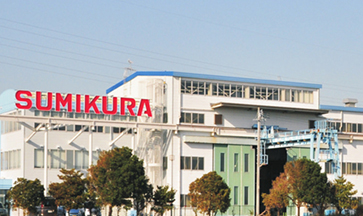
ADDRESS
487-3, Sanshincho, Chuoku, Hamamatsu, Shizuoka, Japan
 Japan local market : +81 53-425-5331
Factory in China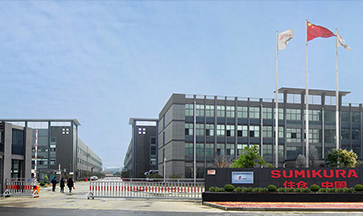
ADDRESS
265 Yixian Road, Deqing, Zhejiang, China
Overseas market : +86 572-883-2016



