
In modern metal processing, cutting accuracy and edge quality have a direct impact on the performance of downstream operations such as stamping, forming, and assembly. As manufacturers work with a wider range of steel grades, sheet thicknesses, and blank geometries, conventional shearing methods may not always offer the flexibility required for today's production lines. An Oscillated Shear Tool provides an alternative by combining an integrated cutting assembly with controlled oscillating motion, enabling the production of both rectangular and trapezoidal sheet metal blanks.
Achieving consistent results, however, takes more than choosing the right shear. Blade geometry, cutting clearance, structural rigidity, motion synchronization, and material properties all influence the finished blank. Understanding how these factors work together helps manufacturers select suitable tooling and maintain reliable cutting performance.
An Oscillated Shear Tool is designed to cut sheet metal into different blank shapes, including rectangular and trapezoidal profiles. In SUMIKURA's solution, the tool is mounted on the press table and features an integrated cutter assembly. This arrangement provides a compact, coordinated structure for the shearing operation.
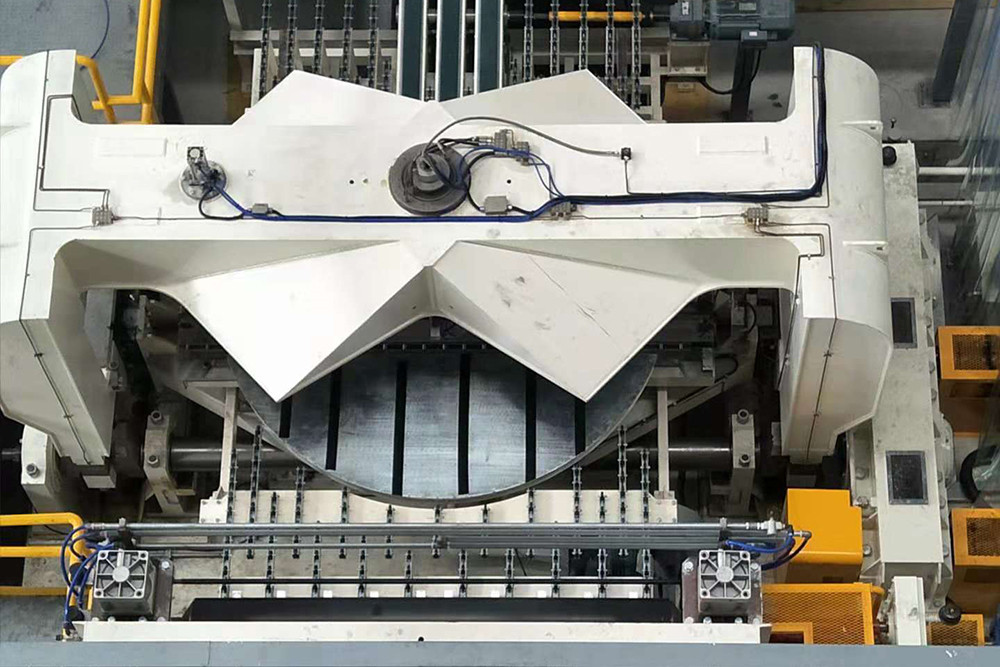
In a rotary oscillating shear system, the cutting mechanism moves in synchronization with the continuously fed metal strip. The rotating motion follows the direction of material travel, while transverse oscillation creates the required cutting path. Once a cut is completed, the mechanism returns to its starting position for the next cycle. Unlike conventional stop-type shearing, this method allows the strip to keep moving during the cutting process, reducing the need for repeated stops in coil processing lines.
This movement is particularly useful when producing trapezoidal blanks. By adjusting the oscillation angle, manufacturers can create angled cuts to meet specific blank geometry requirements rather than relying solely on perpendicular cuts. This flexibility is valuable in applications where the shape of the blank must match a particular stamping or forming process.
Cutting accuracy depends on how the tool structure, blade positioning, and operating parameters work together. Even a well-designed cutting system can produce inconsistent results if these factors are not properly matched to the material and production conditions.
Blade geometry determines how cutting forces are applied to the sheet metal. Factors such as cutting-edge angle, blade profile, material hardness, and edge condition all influence the shearing process and the resulting cut quality. A suitable blade design helps maintain stable cutting conditions while limiting unnecessary deformation around the cut.
Blade wear also deserves attention. As the cutting edge becomes dull, cutting resistance can increase and the resulting edges may become less consistent. Depending on the material being processed and the production volume, manufacturers should establish suitable inspection and sharpening schedules to maintain reliable performance.
Blade clearance is the gap between the upper and lower cutting edges during shearing. It is one of the main factors affecting burr formation, fracture behavior, and cut-face quality.
Excessive clearance can cause greater material deformation before separation, resulting in larger burrs and uneven edges. Insufficient clearance, on the other hand, can increase friction and mechanical loading, accelerating blade wear. The appropriate setting depends on material thickness, strength, and mechanical properties.
Blade alignment is equally important. If the upper and lower blades are not properly aligned, cutting conditions may vary across the sheet width, leading to inconsistent edge quality and dimensional deviations. Proper installation, alignment checks, and routine maintenance are therefore essential to keeping the shearing process stable.
The oscillation angle determines the orientation of the cut relative to the direction of material travel. It is particularly important when producing trapezoidal blanks or other angled sheet metal profiles.
SUMIKURA's published rotary oscillating shear line configurations include oscillation ranges of 0°–35° and 0°–32°, depending on the equipment configuration. The appropriate angle should be selected according to the required blank geometry and the coordination between the cutting mechanism and strip feed.
Motion synchronization also plays a major role in dimensional consistency. If the cutting mechanism does not accurately follow the moving strip, relative movement between the blade and material can affect cut positioning and edge quality. Precise coordination of the rotary and oscillating movements is therefore essential for repeatable cutting results.
The rigidity of the tool assembly and its supporting structure affects how well the blades maintain their positions under cutting loads. Vibration, structural deflection, or loose mechanical connections can introduce cutting variations, particularly during extended production runs.
A rigid, stable structure helps maintain blade alignment and minimizes unwanted movement during each cutting cycle. This becomes especially important when processing wider sheets, higher-strength materials, or blanks that require tight dimensional tolerances.
Edge quality is one of the clearest indicators of shearing performance. For manufacturers supplying components to the automotive, appliance, and construction industries, excessive burrs, rough fracture surfaces, and edge deformation can create problems in subsequent manufacturing operations.
Burr formation is closely linked to blade clearance, cutting-edge sharpness, material properties, and the condition of the shearing mechanism. When the clearance is not properly matched to the material thickness, the sheet may undergo excessive plastic deformation before fracture occurs. The result can be an irregular edge that requires additional deburring or finishing.
The condition of the cutting edge matters just as much. Worn or damaged blades can increase friction and produce inconsistent cuts, particularly during long production runs. Regular inspections and timely blade sharpening help maintain stable cutting conditions and reduce quality variations.
Surface protection is another consideration when processing coated steel or aluminum. Scratches, local distortion, and excessive contact during material transfer can affect the appearance and usability of finished blanks. Cutting quality should therefore be assessed alongside the material handling system rather than treating the shear tool as a standalone component.
Different metals respond differently to shearing forces, so an Oscillated Shear Tool must be selected and configured according to the materials being processed. Sheet thickness, tensile strength, yield strength, hardness, and work-hardening characteristics all influence cutting requirements.
High-strength steel (HSS) generally places greater demands on cutting force, blade strength, and wear resistance. These materials require careful consideration of blade specifications and maintenance intervals to maintain consistent performance. Cold-rolled steel (CRS), commonly used in components requiring good surface quality and dimensional accuracy, benefits from stable blade clearance and precise positioning.
Hot-rolled steel (HRS) presents different challenges due to variations in thickness, surface condition, and mechanical properties between grades. Aluminum also requires careful handling, particularly when surface appearance and edge condition are important. Its relatively soft nature makes it more susceptible to local deformation under unsuitable cutting conditions.
SUMIKURA's published oscillated shear line specifications list HSS, CRS, and HRS among the supported materials, while one configuration also covers aluminum. Depending on the line configuration, the specified material thickness ranges are 0.2–4.0 mm and 0.4–3.0 mm. Actual tool selection and operating parameters should be confirmed against the material grade, thickness, and production requirements of each application.
Blade design is only part of the equation. The way the tool moves in relation to the incoming strip also has a significant effect on production efficiency, particularly in high-speed coil processing.
In conventional stop-type shearing, the material feed must pause during each cutting cycle. Repeated stopping and restarting can limit line productivity and place additional demands on the feeding system. A rotary oscillating shear works differently: its cutting mechanism follows the moving strip during the shearing process, allowing material to continue traveling through the line.
This approach helps maintain a more consistent production rhythm while making angled cutting possible without repeatedly stopping the material feed. For manufacturers producing trapezoidal blanks and other non-rectangular profiles, it can also provide greater flexibility in blank layout and potentially reduce unnecessary offcuts, depending on the part geometry and nesting arrangement.
SUMIKURA's published rotary oscillating shear specifications indicate a maximum line speed of 80 m/min. The available configurations include oscillation angles of 0°–35° and 0°–32°. These figures offer a useful starting point when evaluating equipment capacity, although actual production speed depends on material properties, blank dimensions, cutting conditions, and the overall line configuration.
An Oscillated Shear Tool needs to work in coordination with the other equipment in a coil processing line to deliver consistent results. Upstream equipment affects the condition of the strip entering the cutting area, while downstream systems determine how efficiently and safely the finished blanks are transferred and stacked.
A leveling system helps correct flatness defects before shearing. Problems such as edge waves, center buckles, and residual coil curvature can cause the material to enter the cutting area unevenly, potentially affecting blank flatness and dimensional consistency. A belt bridle can also help stabilize strip tension between processing sections, supporting more consistent material feeding.
After cutting, SUMIKURA's documented line arrangement uses a telescopic belt followed by a magnetic conveyor belt to transfer blanks toward the stacking station. The appropriate stacking method depends on the material and handling requirements. Magnetic stacking is suitable for ferrous sheets, while vacuum stacking can be used for non-ferrous materials such as aluminum.
This integrated setup is particularly useful in automated production environments, where cutting accuracy, surface protection, and material handling all need to be considered together. A properly configured line can reduce unnecessary handling interruptions and support a smoother workflow from coil feeding to finished blank stacking.
Choosing an Oscillated Shear Tool involves more than comparing maximum line speed or cutting width. Manufacturers should start by defining their actual production requirements, including material grades, thickness range, coil width, blank dimensions, and the cutting geometries required.
The available oscillation angle is particularly important for facilities producing trapezoidal or angled blanks. Buyers should check whether the equipment can accommodate their required cutting angles and maintain accurate synchronization during continuous operation. For facilities processing multiple material grades, blade specifications, clearance adjustment, and ease of maintenance also deserve attention.
Compatibility with existing production equipment is another important factor. The shear tool must operate effectively with the press table, feeding system, leveling equipment, and downstream conveyors. Buyers should also discuss changeover procedures, spare blade availability, maintenance support, and options for adapting the equipment to future production requirements.
For high-volume manufacturers, total cost of ownership should be part of the decision. A suitable cutting solution needs to balance production capacity, edge quality, material utilization, tooling life, and maintenance requirements rather than focusing solely on the initial purchase price.
Established in 1947, SUMIKURA Co., Ltd. specializes in coil processing equipment and complete production line solutions. Based in Hamamatsu, Shizuoka, Japan, the company offers equipment for blanking, cut-to-length processing, oscillated shearing, and slitting. Its manufacturing and engineering operations also extend to facilities in Zhejiang, China.
SUMIKURA's Oscillated Shear Tool is designed as an integrated cutting solution mounted on the press table. Its ability to produce both rectangular and trapezoidal sheet metal blanks makes it suitable for manufacturers seeking greater flexibility in coil-to-sheet processing. As part of the broader rotary oscillating shear system, the tool can be incorporated into production lines designed for synchronized cutting and continuous material transfer.
Rather than treating the cutting assembly as an isolated unit, SUMIKURA offers a broader range of coil processing equipment that allows manufacturers to consider the shear alongside leveling, strip feeding, conveying, and stacking systems. This integrated approach is particularly relevant to automotive suppliers, appliance manufacturers, and metal service centers looking for consistent blank quality and reliable production performance.
Manufacturers planning a new coil processing line or upgrading an existing facility can explore SUMIKURA's Oscillated Shear Tool and Oscillated Shear Lines to review available configurations and discuss their specific production requirements.
The design of an Oscillated Shear Tool directly affects cutting accuracy, edge quality, and production stability. Blade geometry, clearance, alignment, oscillation angle, and structural rigidity all contribute to the quality of the finished blank. These factors must be matched to the material being processed and the operating conditions of the complete production line.
For manufacturers working with steel and aluminum coils, the right combination of cutting motion and tool configuration can provide greater production flexibility while maintaining consistent blank quality. Evaluating both tool performance and line integration helps buyers make informed decisions when selecting an oscillated shearing solution for long-term manufacturing needs.

Your cutting line specialists!
 Factory in Japan

ADDRESS
487-3, Sanshincho, Chuoku, Hamamatsu, Shizuoka, Japan
 Japan local market : +81 53-425-5331
Factory in China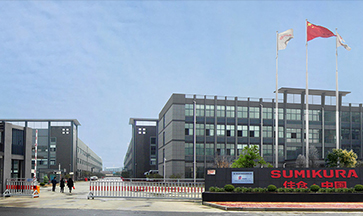
ADDRESS
265 Yixian Road, Deqing, Zhejiang, China
Overseas market : +86 572-883-2016



