
In modern coil processing, slitting accuracy is not determined by the slitting knives alone. Strip tension is one of the key process variables affecting edge quality, dimensional stability, surface protection, and recoiling performance. When a wide metal coil is divided into multiple narrow strips, the material must remain stable while passing through the slitter, tension unit, separator section, and recoiler. Any significant variation in tension can cause strip wandering, loose winding, edge deformation, scratches, dents, telescoping, or inconsistent coil shape. For this reason, advanced coil cutting and slitting equipment increasingly uses controlled tension systems rather than relying only on mechanical knife adjustment.
Tension control refers to maintaining a controlled pulling force in the strip as it travels through different sections of a slitting line. In practical terms, the system controls the relationship between strip speed, roll torque, braking force, and material resistance so that the strip does not become excessively loose or overstressed.
A typical slitting process starts with coil unwinding and strip threading, followed by leveling or guiding, slitting, separation, and recoiling. Each section can generate a different material tension. The tension unit acts as a controlled transition between these processes. Depending on material, thickness, surface requirements, and production speed, a slitting line may use a felt plate, belt bridle, or driven-roll tension system.
For manufacturers evaluating Coil Cutting and Slitting Equipment, tension capability should therefore be considered together with slitting width, thickness range, line speed, tooling configuration, and recoiler design rather than as an independent specification.
Strip tension is not constant throughout the entire coil. One major reason is that the coil diameter changes continuously during unwinding and recoiling. As the outer diameter becomes smaller or larger, rotational speed and torque requirements change even when the linear strip speed remains constant.
Material properties also have a direct effect. High-strength steel, stainless steel, aluminum, cold-rolled steel, hot-rolled steel, and electrical steel respond differently to tension. Thickness variation, yield strength, strip width, surface lubrication, and friction at contact points can all influence the actual tension required.
Slitting itself introduces another variable. After the wide strip is divided into narrow strands, the individual strips no longer behave as one continuous web. Differences in strip width, knife penetration, material properties, and winding diameter can create unequal tension between individual strands. If this difference is not controlled, some strips may become tight while others remain loose.
This is why a high-performance slitting line needs a tension system that can compensate for changing process conditions instead of simply applying a fixed mechanical force.
Insufficient tension can cause loose winding, unstable strip tracking, coil collapse, and telescoping. During recoiling, a strip that is too loose cannot form a compact coil. Air may remain trapped between layers, while different strips can develop different winding densities.
Excessive tension creates a different set of problems. Thin materials may stretch or deform, while sensitive surfaces can be damaged by excessive contact pressure. Uneven tension may also amplify small alignment errors and make the finished coil difficult to handle.
The most important point is that tension must be stable, not simply high. A well-designed system should provide sufficient force to keep the strip controlled without unnecessarily loading the material.
For applications involving premium electrical steel or visually sensitive metal surfaces, this balance becomes especially important. SUMIKURA describes its slitting systems as using tension technologies designed to maintain strip stability while protecting surface quality.
Different tension technologies are suitable for different production requirements.
A felt plate tension system creates frictional resistance between the strip and a controlled contact surface. It is a relatively straightforward solution and can be suitable for applications where the surface requirements and material characteristics allow controlled contact.
A belt bridle uses driven belts to grip the strip and establish tension through controlled differential speed and traction. This arrangement can provide strong and stable tension while reducing dependence on direct sliding contact. SUMIKURA's belt bridle solutions include single-layer and double-layer configurations, with designs intended for different sheet conditions, including oily and non-oily materials.
Driven rolls provide another approach by applying controlled torque directly through powered rolls. This can be advantageous when surface protection and precise tension regulation are important, particularly in high-value or sensitive strip processing.
The correct choice depends on strip material, thickness, surface condition, required tension range, line speed, and downstream recoiling requirements. There is no single tension device that is optimal for every coil slitting application.
Surface damage is often associated with uncontrolled contact, unstable strip movement, or excessive pressure. When tension fluctuates, the strip can move irregularly through guide elements and winding components. Small movements can become scratches, dents, edge marks, or other visible defects when the material repeatedly contacts mechanical components.
Controlled tension helps keep the strip path predictable. It also reduces the possibility of sudden strip slack followed by rapid tension recovery, which can create impact-like loading at contact points.
This becomes particularly important for electrical steel, stainless steel, coated materials, and other products where surface condition is part of the final product specification. SUMIKURA highlights back-tension control and surface protection as important functions of its slitting-line design.
Slitting produces several narrow strips that must be separated and rewound into individual coils. If the tension of each strip is inconsistent, the strips may not remain properly aligned during recoiling.
Stable tension works together with the separator arbor and recoiler to keep each strand under controlled load. This improves winding density and reduces the risk of telescoping, loose edges, coil shape distortion, and uneven layer formation.
Recoiling is therefore not simply the final step after slitting. It is an active part of the quality-control process. A precise knife setup can produce accurate slit widths, but poor tension control can still result in a finished coil that fails downstream handling or customer requirements.
SUMIKURA integrates slitting, tension control, separation, and recoiling within its coil processing line configurations, including double-slitter and turnstile arrangements.
Back-tension control refers to controlling the tension on the strip before or around the recoiling and slitting process so that the material remains stable as it is wound. Instead of allowing the recoiler alone to determine strip tension, a dedicated tensioning device helps establish a controlled tension relationship between different line sections.
This is especially useful when processing narrow strips at high speed. As strip width decreases, the mechanical behavior of each strand becomes more sensitive to changes in tension. Back tension can help prevent slack material from entering the winding section and can improve the compactness and consistency of the finished coil.
SUMIKURA's published slitting-line information identifies felt plate, belt bridle, and driven rolls as tension-unit options and describes back-tension systems for high-speed strip handling.
Increasing line speed does not simply mean increasing motor speed. At higher speeds, tension fluctuations become more difficult to control because the system has less time to respond to changes in strip behavior.
A sudden change in tension can cause vibration, strip flutter, edge instability, or winding defects. The control system must therefore coordinate strip speed, motor torque, braking force, and tension response.
SUMIKURA's standard slitting-line specifications indicate operating speeds of up to 300 m/min, while its published electrical-steel slitting information describes back-tension capability at higher speeds. This illustrates why high-speed coil processing requires tension control to be considered as part of the complete mechanical and automation system rather than as an isolated component.
Automation changes tension control from a mainly operator-dependent adjustment into a repeatable process parameter. A modern slitting line can coordinate tension settings with material data, line speed, coil dimensions, slitting configuration, and production requirements.
This is particularly valuable when processing different grades and thicknesses. Instead of manually adjusting the system for every coil, automated control can use predefined process parameters and feedback to maintain more consistent operating conditions.
Automation also has an important relationship with tooling changeover. SUMIKURA's automatic slitter exchange systems are designed to move finished tooling out of the production position while new tooling is prepared and loaded, reducing manual intervention and changeover work.
When automated setup, tension control, slitter exchange, scrap handling, and recoiling are integrated, the benefit is not only higher speed. The larger advantage is process repeatability. Every coil can be processed according to a controlled production recipe, reducing variation between operators and production batches.
When selecting coil cutting and slitting equipment, buyers often focus first on maximum coil width, thickness, line speed, number of strips, and knife configuration. These specifications are important, but they do not fully determine finished coil quality.
Tension control connects many of the machine's individual functions. It influences how the strip enters the slitter, how stable the narrow strands remain after cutting, how effectively the strips are separated, and how tightly they are rewound.
For heavy-duty applications, equipment capability also needs to match the material. SUMIKURA's metal slitting line is designed for materials including HSS, CRS, HRS, stainless steel, and aluminum, with a processing width of up to 2,500 mm, coil weight up to 35 tons, thickness from 0.2 to 9.0 mm, and production of up to 50 strips.
For electrical steel applications, SUMIKURA also provides dedicated slitting-line configurations for CRGO and CRNGO materials, where surface quality, narrow-strip stability, and controlled tension are particularly important.
Founded in 1947 and headquartered in Hamamatsu, Japan, SUMIKURA Co., Ltd. specializes in coil processing lines, including blanking lines, cut-to-length lines, oscillated shear lines, and slitting lines. Its product range covers coil-processing applications from general metal processing to precision electrical-steel slitting.
The company's slitting-line solutions combine mechanical slitting technology with tension units, recoiling systems, tooling exchange, and automation. Its published configurations include felt plate, belt bridle, and driven-roll tension technologies, as well as double slitter and turnstile arrangements.
For manufacturers looking for reliable Coil Cutting and Slitting Equipment, the key question is therefore not simply how fast a machine can cut. A more useful question is whether the complete line can maintain controlled tension, stable strip alignment, clean edges, consistent recoiling, and repeatable production quality at the required speed.
In high-performance coil processing, tension control is the link between cutting accuracy and finished-coil quality. As slitting lines become faster and more automated, precise tension management will remain one of the most important technologies for reducing defects, protecting surfaces, and achieving stable production.

Your cutting line specialists!
 Factory in Japan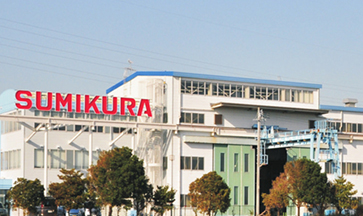
ADDRESS
487-3, Sanshincho, Chuoku, Hamamatsu, Shizuoka, Japan
 Japan local market : +81 53-425-5331
Factory in China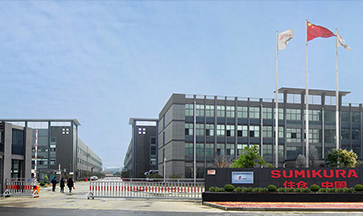
ADDRESS
265 Yixian Road, Deqing, Zhejiang, China
Overseas market : +86 572-883-2016



